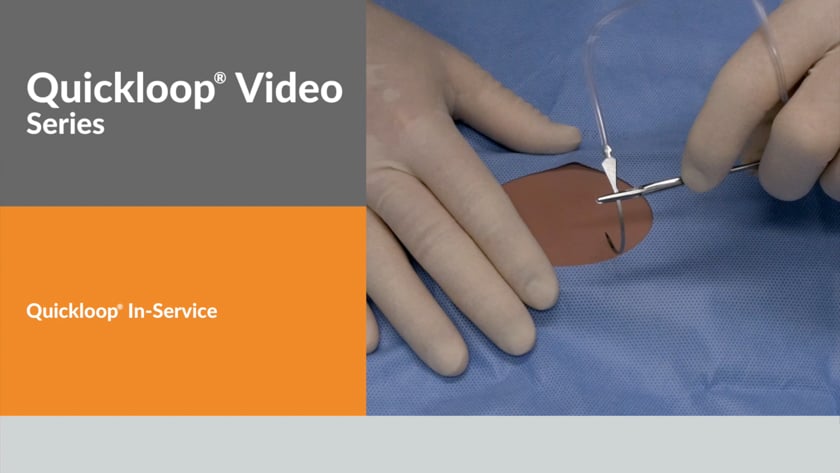
Quickloop In-Service
This resource page contains information on how to use Quickloop to treat patients with abscesses. If you prefer to have a live training event, please click below to schedule an online educational session. Many clinicians also find simulation kits to be useful in training.
Step 1: Assemble Supplies


Step 2: Watch Videos
Step 3: Review Frequently Asked Questions
Local anesthesia to the skin where the device will enter and exit, as well as the wall of the abscess, can be helpful to control pain during the procedure.
If the abscess collection appears to be fluctuant, with no loculations that may require instrumentation, local aesthetic injection at the entry and exit points for the device may be adequate. A standard regional block may be preferred if a need for significant instrumentation is anticipated. Using topical anesthetic such as LMX prior to injection may be helpful, especially in children.
Additional Resources
If you have questions about Quickloop or the Quickloop procedure, or would like to schedule a live session, please contact us.